M A I R I E D A U H E R
Watch Mairie’s Film

FR

EN
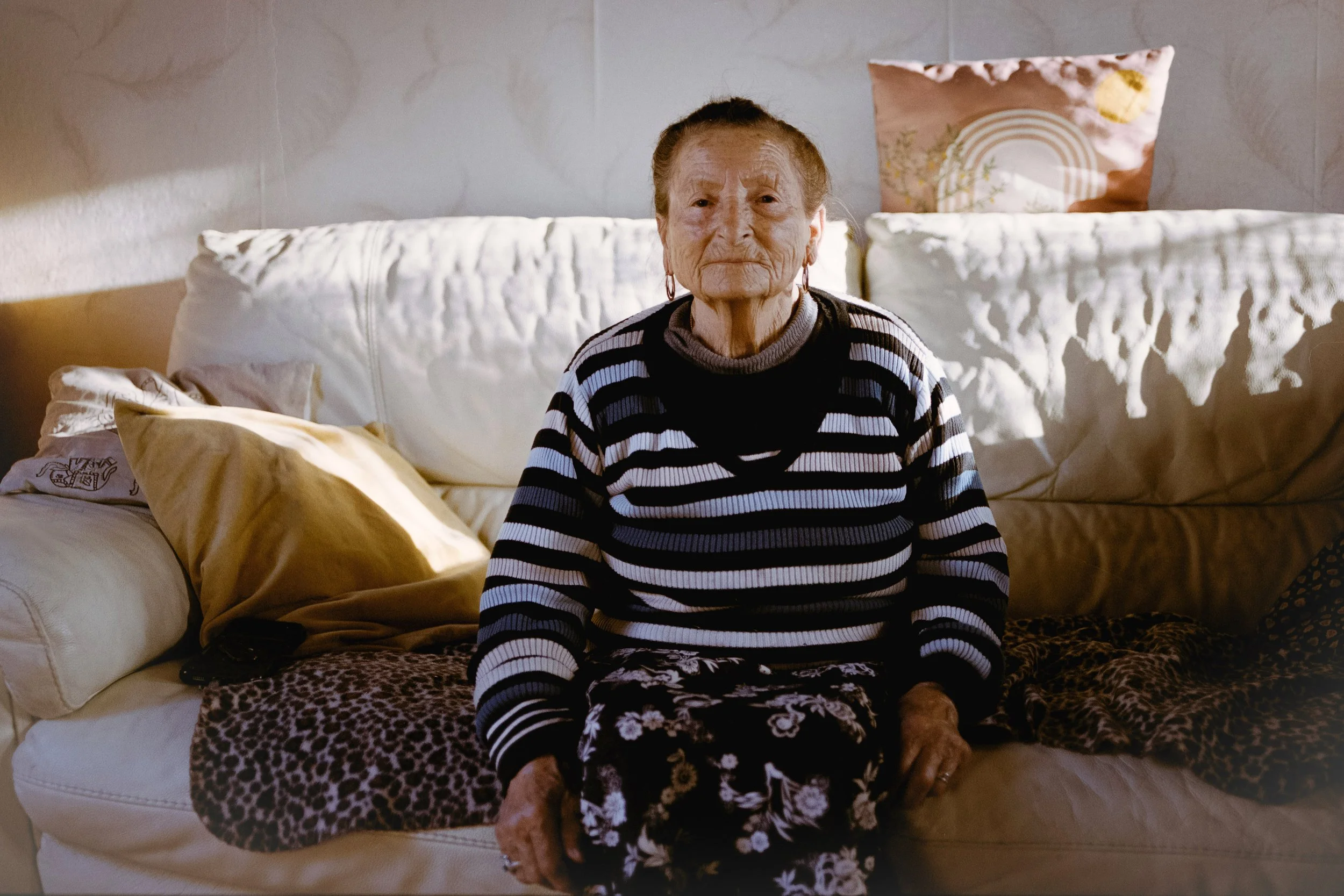
Marie Dauher recounts her childhood in Rouffignac with a quiet clarity shaped by time but not softened by it. She was eight when German soldiers entered the village, an event that fractured the rhythms of ordinary life. Her father, involved in the Resistance, was captured and imprisoned in Germany for seven years, leaving the family to navigate fear and uncertainty alone.
She remembers the warning. Henriette was cycling ahead of the advancing troops and the desperation to hide. Families gathered in cellars and back rooms, clinging to the hope of safety. In the confusion, Marie witnessed violence that would mark her permanently: the killing of a woman in the bistro, the deaths of others nearby, and the presence of displaced Russian children who would not survive the occupation.
Escape brought little relief. Led by her mother, the children were forced into the river under gunfire; her mother was wounded as they fled. They hid for days along the Dordogne, concealed in sand and reeds without food or water, sustained only by instinct and the determination of those protecting them. Eventually, they were ferried to safety, but the memory of those days remained fixed.
Marie speaks, too, of what followed—the incomplete memorials, the names omitted, the stories left unrecorded. For her, remembrance is not abstract. It is tied to specific faces, losses, and acts of courage. Her testimony stands as both a witness and a quiet insistence that these experiences, however painful, must not fade.