J E A N N I N E T E Y S S E D O U
Watch Jeannine’s Film

FR

ENG
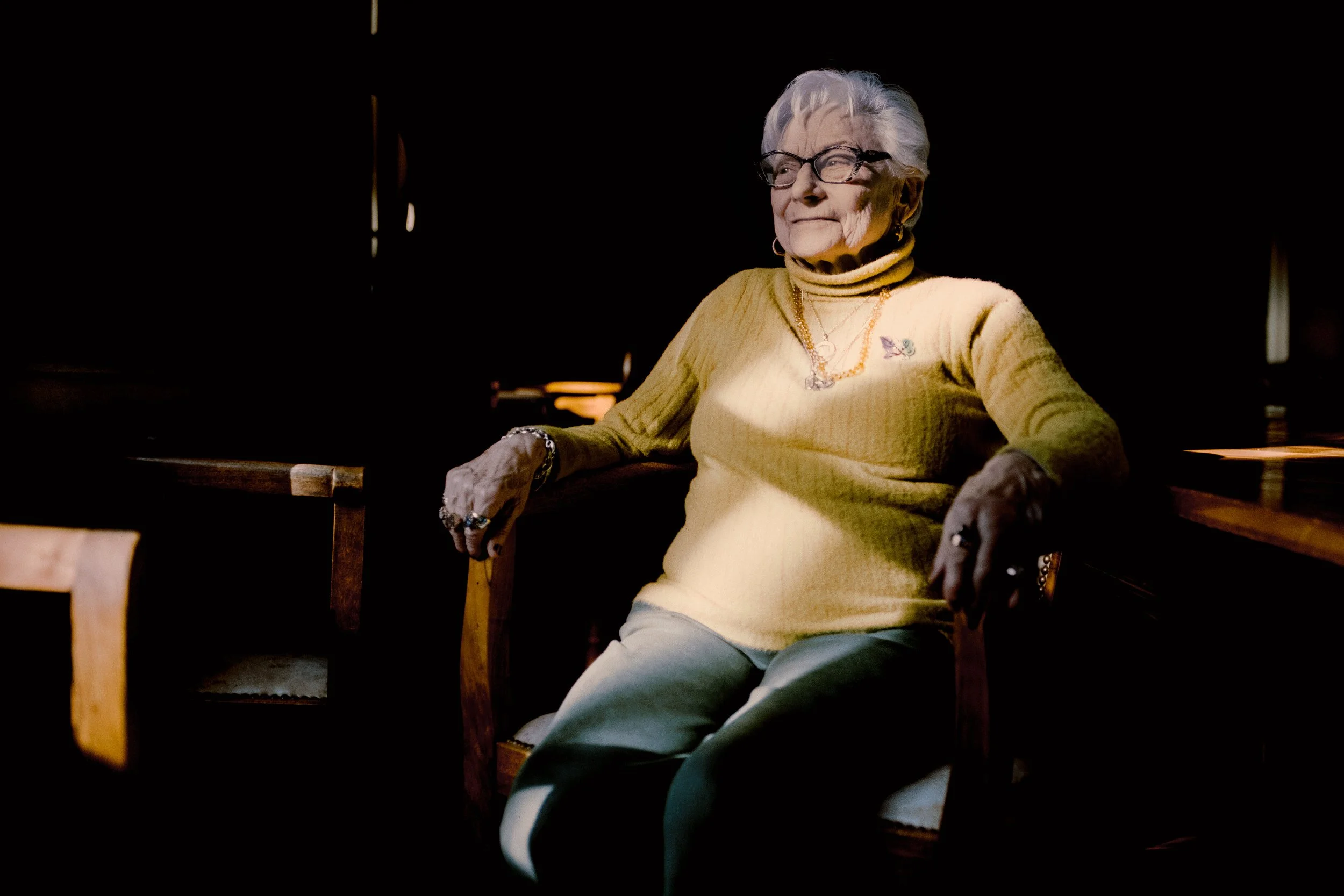
I was six years old when the Waffen-SS came to Terrou, a village hidden among woods and hills where families believed they might be safe.
In May 1944, the Germans arrived at dawn, spreading through the lanes with armoured vehicles. The men had already fled into the forest, so they gathered the women and children instead. We were driven into a meadow and forced to kneel while guns and cannon were pointed at us. They shouted questions, searched every house, and demanded to know where the resistance fighters were hiding.
My mother and I were kept back at our house on the hill above the village. From there, we watched smoke rise as soldiers threw incendiary bombs into the woods, trying to burn out those concealed there. Fear had already become part of childhood. My parents sheltered maquis fighters who slept in barns, cellars, and attics, ready to run at the first warning.
They returned again in June, furious after acts of sabotage on the railway. This time, everyone had been warned. The men disappeared into the forest before dawn, and we women remained hidden behind shuttered windows. From our house, we watched them set Terrou alight. They tried to burn the church, then came back shooting wildly. The bell tower itself burned.
When the soldiers finally left, the men came down from the woods to find homes reduced to ash and stone. Eighteen houses were destroyed. Shops closed, families departed, and the village was changed forever. Yet Terrou endured, rebuilt by solidarity, and later honoured as a village of resistance.